
Stand in a stand of pale-barked, fluttering trees on a breezy September afternoon and the two most likely suspects look almost identical. Aspen and birch share a great deal: both are pioneer trees of open ground, both carry light-coloured bark and small toothed leaves, and both turn gold in autumn. Step closer and the differences are plain. Once you know a handful of features, you can separate them in any month of the year, bare branches included.
The two you are most likely to meet are common aspen (Populus tremula) and silver birch (Betula pendula), with downy birch (Betula pubescens) as a close third in damper, peaty places. Across the Atlantic the same logic works for quaking aspen (Populus tremuloides) and paper birch (Betula papyrifera). The trees may change with the map, but the rules do not. Learn the leaf, the bark, the winter twig and the way each tree grows, and you will be able to name a bare trunk in January as confidently as you name a leaf in July.
Leaves: shape, stalk and that constant tremble
The leaf is the quickest clue in summer. An aspen leaf is round — almost circular — roughly three to seven centimetres across. Look at the base, where the blade meets the stalk: it is cut off flat, as though trimmed with a knife, rather than curving in. The edge is wavy, with rounded lobes and shallow teeth, and the stalk itself is long, slender and flattened along its length.
That flattened stalk explains the aspen's most famous habit. The blade hangs at an angle and twists in the least breath of wind, so a single leaf flickers while its neighbours are still. Watch a crown on a nearly still day and you will see individual leaves quivering — a movement no birch manages. The rustle is soft and continuous, closer to running water than to the dry clatter of beech or oak, and it is loud enough to hear before you see the tree. On a windy day an aspen grove hisses and shimmers from top to bottom like foil.
Silver birch leaves are triangular or diamond-shaped, drawn out to a fine point, with a straight base and a short round stalk. Their edges are doubly toothed: each tooth carries smaller teeth of its own. Downy birch leaves are rounder and less pointed, softer to the touch, and distinctly hairy underneath along the veins and on the stalk. Hold a leaf up against the light and the stalk is the giveaway: flattened in aspen, round in birch.
Two quick tests in the hand
- The roll test. Roll the leaf stalk between finger and thumb. An aspen stalk is flat and ribbon-like; it will not roll. A birch stalk is a fine cylinder and turns easily.
- The base test. Run a fingernail along the bottom edge of the blade. Aspen meets the stalk in a straight line, often with two tiny glands; birch curves down to a narrow point.
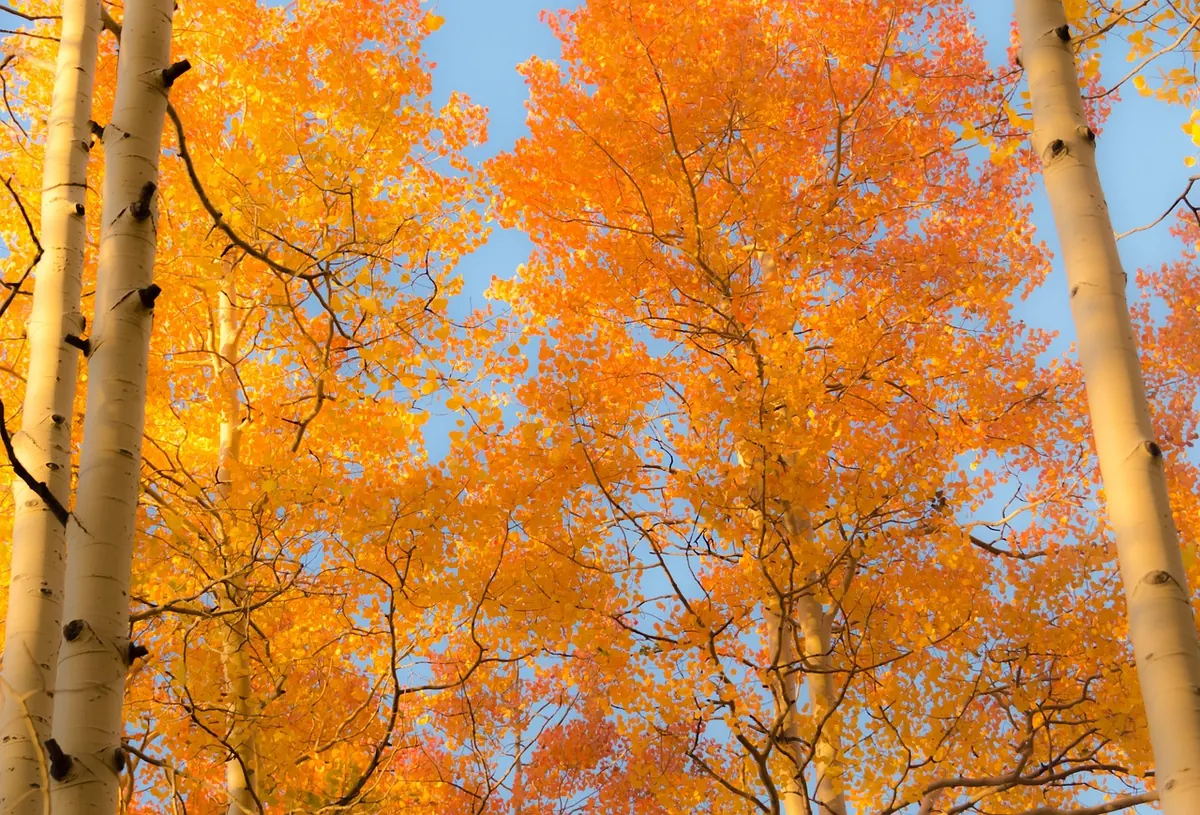
In autumn the difference is subtler but still useful. Aspen turns a uniform, slightly orange-tinted gold and often drops its leaves within a couple of weeks, while birch yellows more slowly and holds its leaves longer. Both, however, can look near-identical from a car window, which is why you should never trust colour alone.
Bark: the peel test and the diamond code
Bark is the most reliable year-round character, and it works just as well in February as in June. Aspen bark on a young tree is smooth, pale grey-green and slightly chalky, dusted as though with talcum powder. Across it run horizontal and diamond-shaped pores, called lenticels. On an old aspen the base of the trunk breaks into dark, deep fissures arranged in rough diamonds, with black knotty "eyes" where dead branches were sealed over. What aspen bark almost never does is peel. It is tight and papery-fine on the surface, but it clings.
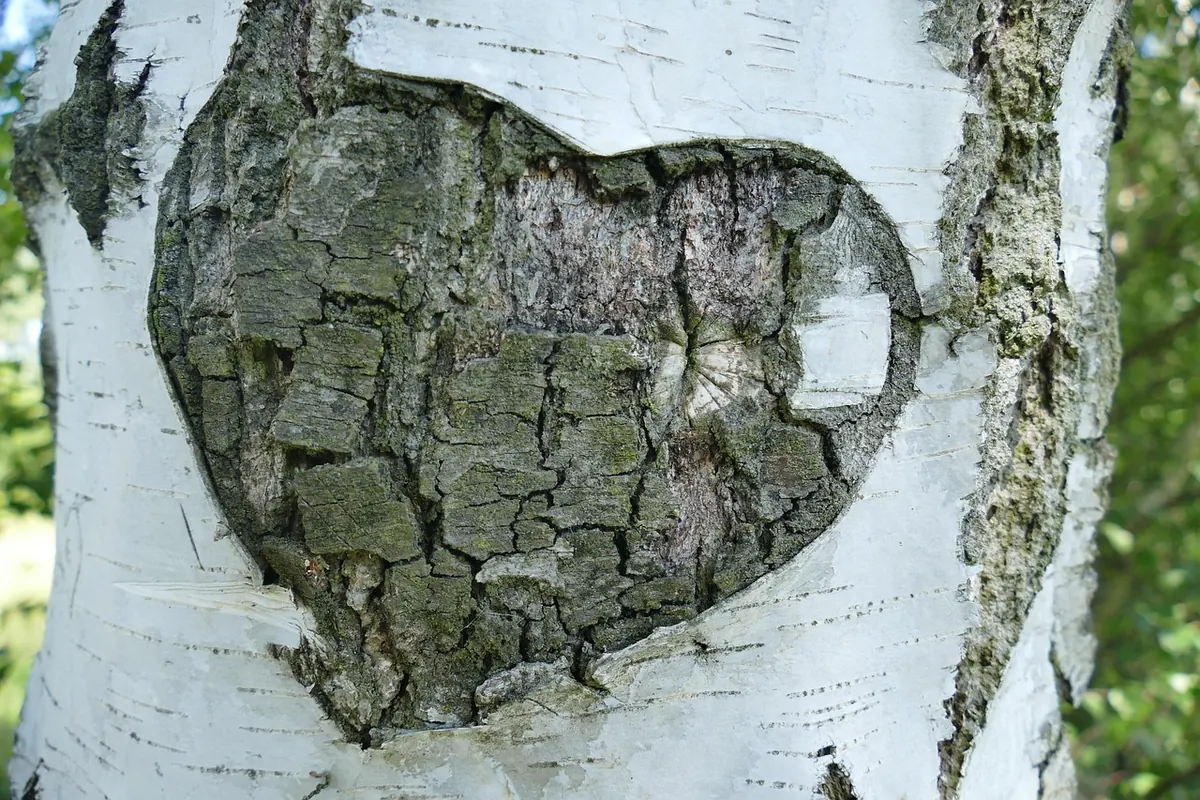
Birch bark tells a different story. Silver birch is white with black horizontal dashes, and it peels — thin, papery ribbons curl away from the trunk, especially on the sunlit side and around old scars. Under the white is a smooth, orange-pink or buff layer. Downy birch bark is greyer and whiter, less strongly peeling, and its twigs are softly hairy rather than warty. If you can strip a strip of bark with your fingers as though unrolling a paper ribbon, you have a birch. If the trunk feels like smooth, dusty skin with diamonds stamped into it, you have an aspen.
The scratch-and-sniff test
Scrape a twig lightly and smell it. Birch twigs very often carry the cool, medicinal scent of wintergreen — the same smell as oil of wintergreen, produced by the same compound used in muscle rubs. Aspen buds are sticky with resin and smell sweet, spicy and faintly balsamic, closer to cough sweets than to toothpaste. Neither smell is guaranteed on a cold, wet day, but together the two tests are right more often than a distant glance ever will be.
Winter twigs, buds and catkins
With leaves gone, work on the twigs. Aspen twigs are moderately stout, with alternate buds that are reddish-brown, glossy, pointed and noticeably sticky. The buds sit close along the stem and can be surprisingly large and fat — a centimetre or more. Rub one between finger and thumb and your fingertips stay tacky and perfumed.
Birch buds are smaller and neater, pointed and glossy, held tight against slender twigs. On silver birch the twig is hairless and covered in tiny warty bumps, which is why an older name for it is warty birch. Downy birch twigs, by contrast, feel like fine sandpaper when stroked. Birch also gives you winter catkins: male catkins form in autumn and hang stiffly from the twig tips through the coldest months, usually in groups of two to four, like small brown lambs' tails waiting for spring. Aspen catkins stay hidden in the buds until late winter and early spring, and aspen typically flowers before its leaves appear.
If a bare tree is wearing brown catkins like little sausages all winter, think birch. If the twigs are sticky and scented and the catkins are still waiting inside fat, resinous buds, think aspen.
Catkins, seeds and the spring giveaway
Once spring arrives the two trees part company completely. Aspen catkins are long and woolly grey-green, and the male ones burst with purple-red anthers, dangling like fat caterpillars. The female flowers ripen into green capsules, and by early summer they split and release seed wrapped in white cottony down — the same drifting fluff that makes "summer snow" under poplars and willows. If a tree over your head is shedding a cloud of white down in June, it is almost certainly an aspen or a near relative.
Birch takes a different route. Its upright female catkins fatten and stiffen into small, cone-like structures, which crumble apart in late summer and autumn to release tiny winged seeds that spin away on the wind like miniature sycamore keys. The bare cone core often stays on the tree well into winter — a tidy, unmistakable clue on an otherwise leafless branch.
Silhouette and setting: how each tree stands
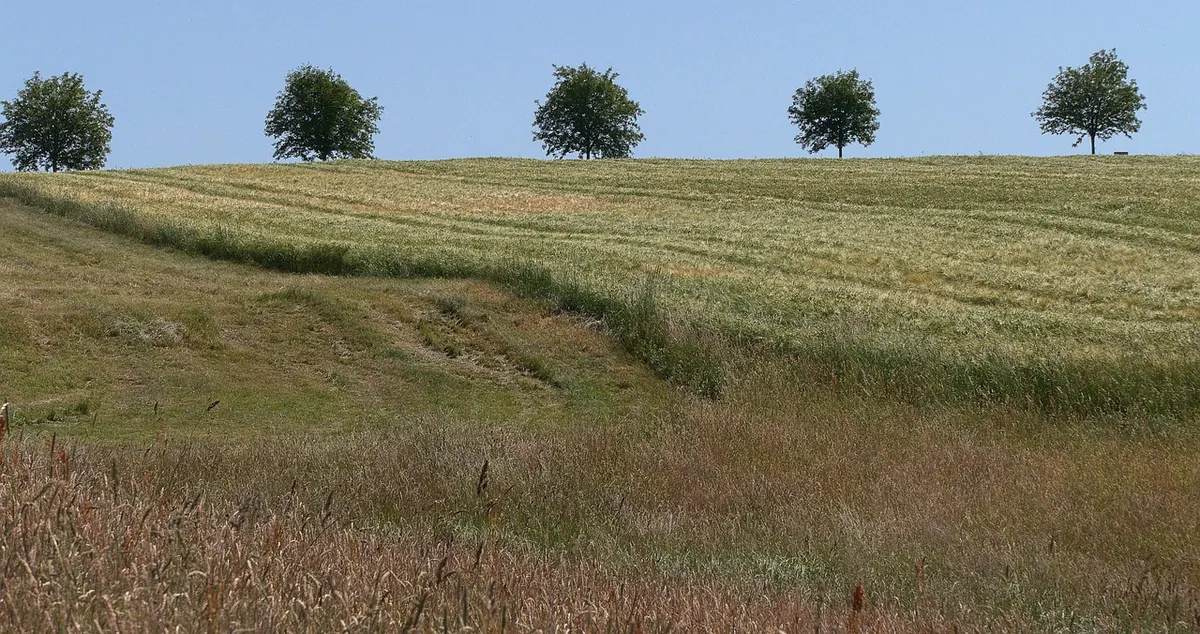
Shape matters too, especially at a distance. Aspen is a tall, column-straight tree with a rounded or slightly flat-topped crown, and its pale trunks often rise in even-aged groups because it spreads aggressively by root suckers. One parent tree can throw up a whole thicket, and in parts of the world a single aspen clone covering many hectares is counted among the largest living organisms on earth. Look for a fence-like line of identical trunks, all leaning and shivering together.
Birch is slighter and more elegant. Silver birch has fine, drooping outer twigs that hang like a curtain and catch every passing breeze, giving the crown a light, airy, slightly weeping look. Birch is usually a solitary pioneer of heathland, gravel, cleared ground and thin upland soils, though it can form pure woods on wetter peat, where downy birch takes over from silver birch. If the trees stand in a loose, graceful crowd with fine trailing twigs, it is birch. If they stand in a dense, uniform thicket of straight pale poles, it is aspen.
A field checklist you can carry in your head
- Leaf stalk: flattened and ribbon-like — aspen. Round and slender — birch.
- Leaf base: cut off straight — aspen. Curving to a point — birch.
- Movement: constant individual quivering — aspen. Leaves move only as a whole crown — birch.
- Bark: dusty grey-green with diamond pores, no peeling — aspen. White with papery peeling ribbons — birch.
- Buds: large, sticky, sweet-smelling — aspen. Small, neat, on warty or hairy twigs — birch.
- Catkins: formed in spring, cottony seed in early summer — aspen. Formed in autumn, hanging all winter, woody "cones" later — birch.
- Growth: dense clonal thickets of straight pale trunks — aspen. Loose stands with fine weeping twigs — birch.
Why it pays to tell them apart
This is not just a parlour game. Aspen is one of the most valuable wildlife trees in northern Europe and North America: its bark is a favourite food of beavers, its catkins feed early bees, its soft wood hosts hole-nesting birds and bats, and its trembling leaves support a small army of moth caterpillars. Because it spreads by suckering, aspen can be killed above ground and still return — but heavy grazing by deer or sheep can strip every sucker and quietly remove whole clones from a landscape.
Birch, meanwhile, is the great healer of bare ground. It colonises scree, burnt land and abandoned fields faster than almost anything else, then shelters the slower trees that follow it. Its seeds feed siskins and redpolls, its catkins feed insects, and its sap is tapped in early spring in northern regions. Knowing which tree you are standing under tells you something about the soil, the history of the site and the animals likely to be nearby.
So next time the pale trunks blur together, resist the urge to guess from colour. Take the leaf stalk between your fingers, or scratch a twig and sniff. The aspen will quiver and smell of resin; the birch will peel and smell of wintergreen. Once you have made the test a handful of times, the whole stand will sort itself out before you have taken ten paces.
Photo: Wildschuetz / Pixabay