
Aspen is one of those trees most people have stood beside without quite realising it. The leaves move when almost nothing else does, the bark carries dark diamond-shaped marks, and in autumn the whole crown turns a soft, buttery gold. Learn a handful of features and you can name it in January as confidently as in July. What follows is a seasonal walk through those features, in roughly the order you will meet them.
Start With the Flutter
The quickest way to spot aspen is to watch it rather than study it. Even a light breeze sets the leaves trembling, and the sound is a dry, papery rustle rather than the deeper wash of sound you get from a big oak. This restlessness comes down to one small piece of engineering: the leaf stalk is long and flattened along its length, so the blade twists freely on the slightest puff of air.
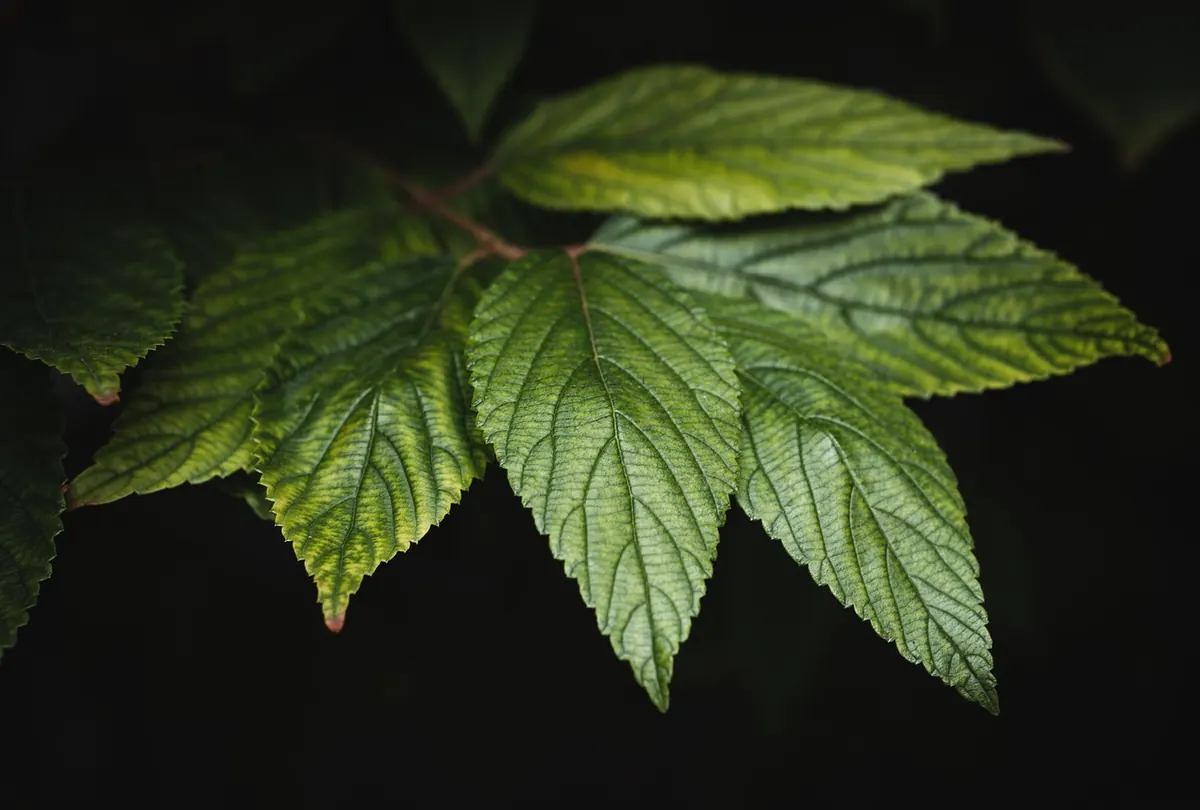
The leaves themselves are rounded to almost circular, usually somewhere between three and eight centimetres across, with a softly wavy edge and shallow, blunt teeth. There is a short point at the tip. The upper surface is a fresh, slightly grey-tinged green and the underside is noticeably paler.
One word of warning for beginners: leaves on vigorous young shoots and root suckers can be far bigger, more triangular and much more coarsely toothed than those higher in the crown. If a single tree seems to be showing two different leaves, look again at the age of the shoot rather than assuming you have found two species.
Buds and Twigs: Winter's Best Clue
Once the leaves are down, you are working with bark, buds and twigs. Aspen buds are arranged in a spiral around the twig, sitting close to it rather than sticking out on stalks. They are pointed, glossy and reddish-brown, often with a slightly sticky feel and a narrow, oval shape.
A useful trick is to gently squeeze a bud between finger and thumb. Aspen buds are not powerfully scented. If you get a strong waft of resin and an orange-brown stain on your skin, you are more likely to be looking at a balsam poplar, a close relative that shares the aspen's love of damp ground.
The twigs are slender and grey-brown, and they lose their fine down after the first year or so. In a stand of aspens, most stems will look remarkably similar, because many of them are not separate trees at all — they are shoots rising from the roots of a single parent.
Bark: Pale Grey-Green, Marked With Diamonds
On young trunks and suckers, aspen bark is smooth and pale, somewhere between grey-green and a creamy, almost bone-like tone. Running across it are small dark marks shaped like diamonds or narrow lozenges. These are lenticels, the pores the tree uses to exchange gases with the air, and on aspen they are unusually crisp and geometric.
Older trunks change character. The bark darkens, cracks and roughens, often carrying moss, lichen and horizontal bands of damage where deer have rubbed. Aspen is generally a short-lived tree compared with oak — decades rather than centuries is typical for an individual stem — but a sucker system can persist far longer, sending up new trunks as old ones fail.
Catkins: The Early Spring Signal
Aspen flowers before or just as the leaves emerge, which makes early spring a good time to catch it. Male and female catkins grow on separate trees. The male ones are the showier: grey-brown, woolly and cylindrical, hanging in loose clusters like small lambs' tails. Female catkins are greener and more slender, and they lengthen after pollination.
Later in spring, female trees produce tiny seeds attached to white down, which drifts like thistledown and can collect along path edges. In Britain, though, aspen often spreads by root suckers rather than seed, which is why you frequently find a ring or cluster of stems that clearly belong together.
Autumn: Gold on Grey
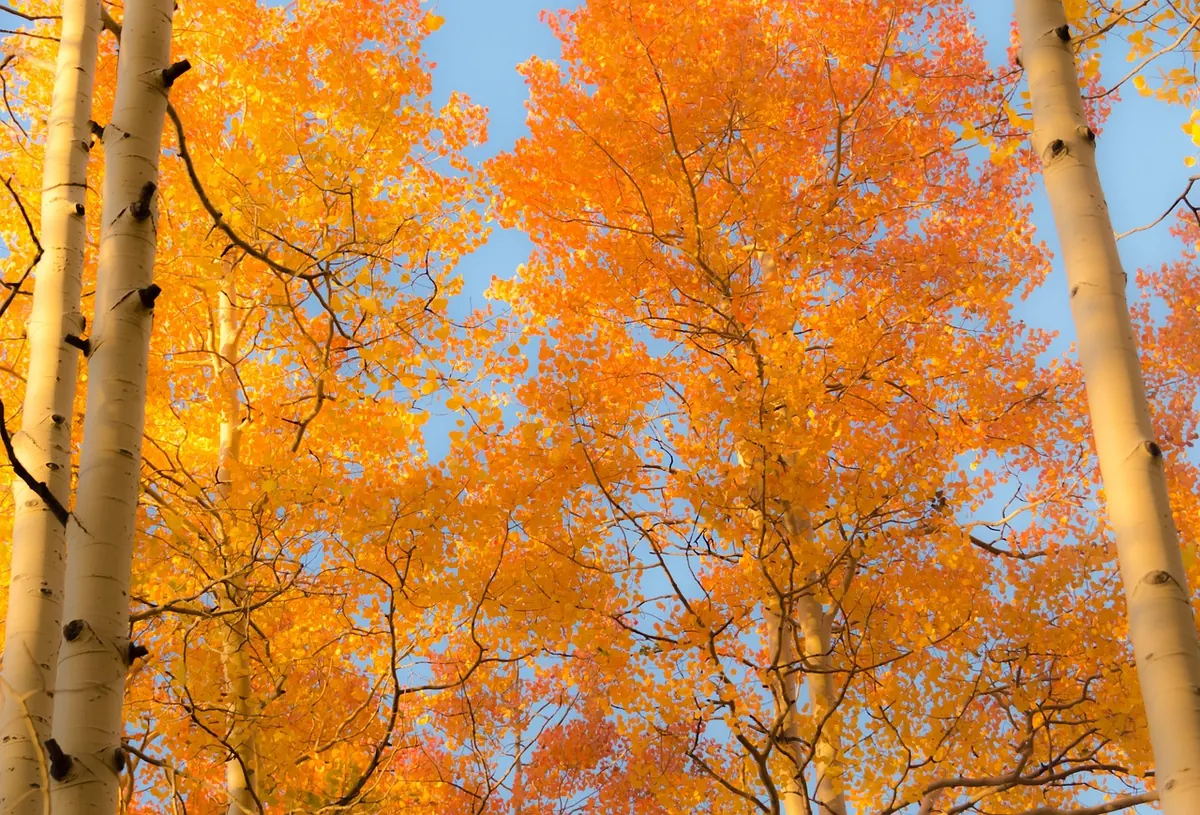
The autumn colour is reliable and unmistakable once you know it. Leaves turn a clean yellow, sometimes with warmer orange or rusty tints catching the light, and they tend to colour and fall earlier than many neighbouring broadleaves. Because a group of stems may be one clone, whole patches can turn at the same moment, which makes the effect look deliberate.
Fallen aspen leaves usually land with the flattened stalk still attached, and they stay flat on the ground rather than curling tightly. Look for them on damp tracks and woodland edges after a windy night.
Aspen, Birch or Another Poplar?
Two trees cause most of the confusion. Birch also grows with pale bark and flutters in the wind, and grey poplar shares the pale underside and restless leaves. Run through these checks:
- Leaf stalk: long and flattened on aspen; short and rounded on birch.
- Leaf shape: rounded to circular on aspen; roughly triangular with sharper, finer teeth on birch.
- Bark: smooth grey-green with dark diamonds on aspen; white and peeling with horizontal dashes on birch.
- Leaf underside: pale green on aspen; grey-white and felted on grey poplar.
- Catkins: thick and woolly before the leaves on aspen; birch catkins are slimmer and hang in finer, more dangling clusters.
- Growth habit: tight clusters of similar stems suggest aspen suckering rather than separate trees.
In summer you may also meet the aspen gall midge, which turns part of a leaf or stalk into a hard red swelling roughly the size of a pea. It is a useful confirmation rather than a problem — the tree carries on regardless.
A Simple Year of Checking
Pick one aspen near a regular walking route and revisit it through the year. In winter, study the buds and the diamonds on the bark. In early spring, watch for catkins opening before the leaves. Through summer, stand underneath and listen to the rustle, and photograph a leaf from above and below to fix the shape in your mind. By September and October, watch the crown turn gold and notice how early it empties.
Two practical habits help. Carry a hand lens for the lenticels and the leaf teeth, and take a photo from the same spot each visit. Within a year you will recognise aspen from a moving car, and you will start seeing it in places you had walked past for years.
Photo: paulsteuber / Pixabay